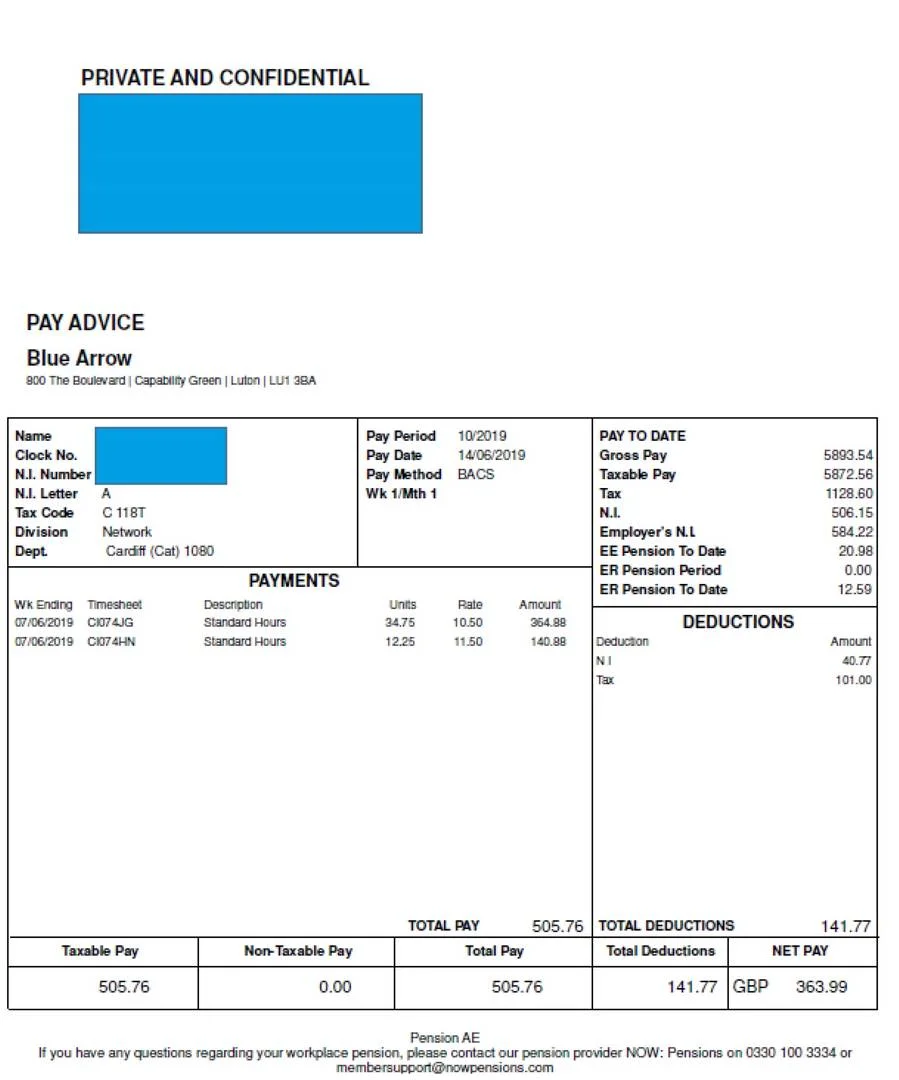
A payslip contains key information about your earnings, deductions, tax, pension contributions, and payment dates, so you can clearly understand how your final take-home pay has been calculated.
Personal Details
Including personal details confirms that the payslip belongs to you. These usually include your full name, employee number, payroll number, and sometimes your job title or department. You may also see your National Insurance number and your employer’s name.
Checking these details is important, because payroll mistakes can happen, especially if there are employees with similar names. If the wrong information appears here, it could affect your tax records, pension contributions, or proof of employment at a later date.
Pay Period and Payment Date
This section tells you which dates your pay covers and when the money should reach your account. For example, it may show that your wages cover the first to the last day of the month, with payment made on the final working day.
Reviewing this helps you match your hours worked, overtime, holiday pay, or shift allowances to the correct period. It also makes it easier to identify missing payments or delays if your salary looks different from what you were expecting.
Gross Pay
Gross pay is the total amount you earn before any deductions are taken away. This includes your basic salary or hourly wages, plus any overtime, commission, bonuses, holiday pay, or statutory payments where applicable.
People often compare gross pay with net pay and wonder why the figures are so different. Gross pay is your full earnings before tax, National Insurance, pension contributions, student loan repayments, or other authorised deductions reduce the final amount you receive. Net pay is simply the total you receive after these deductions are applied.
Deductions
Deductions show the amounts taken from your gross pay before your final salary is paid. Common deductions include Income Tax, National Insurance, student loan repayments, pension contributions, and sometimes union fees or salary sacrifice schemes.
Payslip abbreviations that employers in the UK use can vary, so you may see shortened terms such as PAYE, NI, or pension initials. Understanding your payslip tax details helps you check whether the right amount has been deducted and whether your take-home pay is accurate.
Pension Contributions
If you are enrolled in a workplace pension, your payslip should show how much you and your employer are contributing. This may appear as a percentage of your salary, or as a fixed amount each pay period.
Pension deductions reduce your take-home pay, but they help build your long-term retirement savings. Reviewing this section regularly is useful because it confirms contributions are being paid correctly and that your employer is meeting their legal responsibilities under automatic enrolment rules.