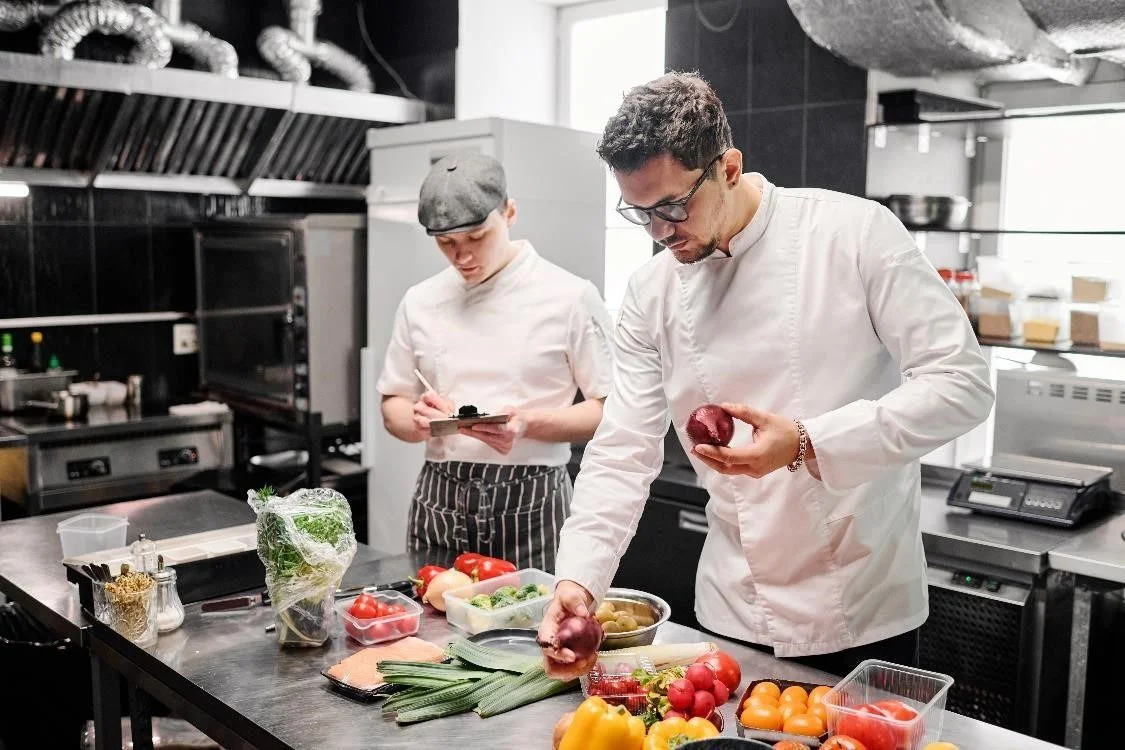

Dress Code
Kitchen Assistants wear practical attire, including aprons, non-slip shoes, and head coverings to ensure hygiene and safety compliance. Some workplaces may provide uniforms.

Kitchen Assistants wear practical attire, including aprons, non-slip shoes, and head coverings to ensure hygiene and safety compliance. Some workplaces may provide uniforms.
Responsibilities include food preparation, cleaning, and assisting Chefs with tasks to ensure the kitchen runs smoothly and adheres to health and safety standards.
Stay organised and proactive in completing tasks. Communicate effectively with your team to understand priorities and support kitchen operations. Pay close attention to cleanliness, as maintaining hygiene standards is crucial in any kitchen. Being eager to learn and adapting to feedback will help you develop the skills needed for career progression.
Key skills to highlight for Kitchen Assistants include basic food preparation, hygiene awareness, and teamwork. These abilities are essential for managing tasks efficiently and supporting the kitchen’s overall performance.
Kitchen Assistants often handle ingredient preparation, including chopping, peeling, and measuring. Familiarity with basic cooking techniques and recipes is advantageous for assisting Chefs during busy service periods. Learning proper knife skills and understanding ingredient storage requirements ensures efficiency and quality. These tasks provide a foundation for more advanced roles, allowing Kitchen Assistants to build confidence and refine their culinary knowledge.
Maintaining a clean and safe environment is crucial for Kitchen Assistants. Tasks include sanitising surfaces, storing ingredients correctly, and adhering to food safety regulations. Understanding cross-contamination risks and following procedures to prevent them ensures compliance with health standards. Regularly cleaning tools and workstations minimises hazards and contributes to a smooth workflow. This attention to hygiene is essential for both food quality and the well-being of the kitchen team.
A collaborative approach is vital for Kitchen Assistants. Clear communication with Chefs and colleagues helps prioritise tasks and manage the fast-paced kitchen environment effectively. Being a team player ensures a harmonious work environment and supports efficient service during peak hours. Building positive relationships with colleagues also enhances learning opportunities, allowing assistants to gain insights from experienced professionals. Strong teamwork skills are critical for long-term success in the culinary field.
Kitchen Assistants handle tasks such as food preparation, cleaning, and maintaining organisation, ensuring the kitchen operates efficiently and adheres to professional standards.
Kitchen Assistants play a key role in ingredient preparation, handling tasks such as chopping vegetables, portioning ingredients, and measuring items for recipes. They often support Chefs during service by providing ingredients or assisting with plating. Ensuring that everything is ready before service begins is crucial for maintaining workflow efficiency. This foundational work allows Chefs to focus on cooking, enabling the kitchen to meet customer expectations.
Maintaining cleanliness is a major responsibility. Kitchen Assistants wash dishes, sanitise surfaces, and ensure equipment is stored correctly. Organising storage areas and replenishing supplies helps keep the kitchen functional and prevents delays during service. These tasks are vital for ensuring a safe and efficient workspace. Regular cleaning routines not only uphold hygiene standards but also contribute to the kitchen’s overall performance and reputation for excellence.
Key skills to highlight for Kitchen Assistants include basic food preparation, hygiene awareness, and teamwork. These abilities are essential for managing tasks efficiently and supporting the kitchen’s overall performance.
Kitchen Assistants often handle ingredient preparation, including chopping, peeling, and measuring. Familiarity with basic cooking techniques and recipes is advantageous for assisting Chefs during busy service periods. Learning proper knife skills and understanding ingredient storage requirements ensures efficiency and quality. These tasks provide a foundation for more advanced roles, allowing Kitchen Assistants to build confidence and refine their culinary knowledge.
Maintaining a clean and safe environment is crucial for Kitchen Assistants. Tasks include sanitising surfaces, storing ingredients correctly, and adhering to food safety regulations. Understanding cross-contamination risks and following procedures to prevent them ensures compliance with health standards. Regularly cleaning tools and workstations minimises hazards and contributes to a smooth workflow. This attention to hygiene is essential for both food quality and the well-being of the kitchen team.
A collaborative approach is vital for Kitchen Assistants. Clear communication with Chefs and colleagues helps prioritise tasks and manage the fast-paced kitchen environment effectively. Being a team player ensures a harmonious work environment and supports efficient service during peak hours. Building positive relationships with colleagues also enhances learning opportunities, allowing assistants to gain insights from experienced professionals. Strong teamwork skills are critical for long-term success in the culinary field.
Kitchen Assistants handle tasks such as food preparation, cleaning, and maintaining organisation, ensuring the kitchen operates efficiently and adheres to professional standards.
Kitchen Assistants play a key role in ingredient preparation, handling tasks such as chopping vegetables, portioning ingredients, and measuring items for recipes. They often support Chefs during service by providing ingredients or assisting with plating. Ensuring that everything is ready before service begins is crucial for maintaining workflow efficiency. This foundational work allows Chefs to focus on cooking, enabling the kitchen to meet customer expectations.
Maintaining cleanliness is a major responsibility. Kitchen Assistants wash dishes, sanitise surfaces, and ensure equipment is stored correctly. Organising storage areas and replenishing supplies helps keep the kitchen functional and prevents delays during service. These tasks are vital for ensuring a safe and efficient workspace. Regular cleaning routines not only uphold hygiene standards but also contribute to the kitchen’s overall performance and reputation for excellence.
With experience, Kitchen Assistants can progress to roles such as Commis Chef or Chef de Partie, taking on greater responsibilities in food preparation and station management. Continuous learning and dedication are key to advancement. Discover more about becoming a Commis Chef or Chef de Partie for insights into these exciting career paths.
Formal training is not required, as most skills are learned on the job. However, food safety certifications are beneficial for working in professional kitchens.
Key skills include attention to detail, time management, teamwork, and basic culinary techniques. A positive attitude and eagerness to learn are also crucial.
Kitchen Assistants typically earn £12.71 - £14 per hour, depending on experience, location, and employer. Rates may increase for specialised environments or peak periods.
Common questions include: “How do you prioritise tasks during busy periods?” and “How do you ensure hygiene and safety standards in the kitchen?”