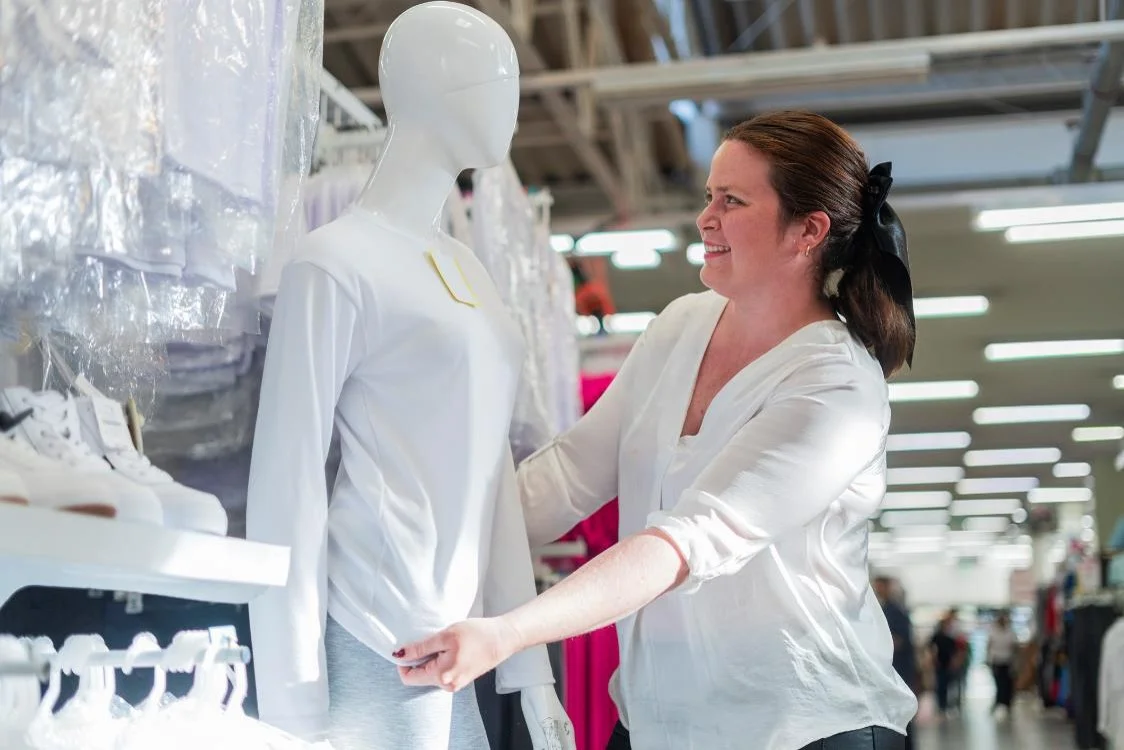

Dress Code
The dress code for a Visual Merchandiser is typically “smart casual” with an emphasis on dressing in a way that reflects the brand image of the store.

The dress code for a Visual Merchandiser is typically “smart casual” with an emphasis on dressing in a way that reflects the brand image of the store.
A Visual Merchandiser is responsible for creating displays in different places inside a store, such as window displays, or internal displays like mannequins or room sets. Through collaboration with marketing teams, and using their knowledge and design skills, they must create a display that appeals to customers and encourages sales.
You should be capable of creating themes using lighting, colour and organisational skills to make a visually striking display that appeals to customers.
It is important to research trends and the company’s ideals to create the correct display for the company. Speaking to marketing teams will also help with brand alignment and help to target the right audience, especially if there are marketing campaigns to consider.
People in Visual Merchandiser jobs need to have a flare for creativity to create eye-catching displays. To do this effectively it is important to understand fashion trends and have good attention to detail.
To make an effective display the Visual Merchandiser must use their understanding of design principles to use elements like colour, shape, and texture to create appealing displays.
The idea is for the display to tell a story, or centre around a theme to draw customer’s attention. It is important to use space and lighting to maximise the effectiveness of the display and this takes creative design knowledge and some artistic understanding.
A good Visual Merchandiser will stay up to date with trends in fashion, retail design and interior design to stay ahead of the curve. This can include using social media to understand customer preferences that they can incorporate into designs.
Understanding trends and using this knowledge to enhance visual displays will help to increase interest in the brand and ultimately increase sales if the display is effective.
Trends change constantly, so it is the job of a Visual Merchandiser to stay on top of trend behaviour.
It is important to pay close attention to detail when creating a display. This includes proper product placement so that items are organised based on their size, price, and customer interest, and correct colour combinations so that they are consistent and not jarring.
A Visual Merchandiser will be able to make sure fixtures and items are straight and evenly spaced. Everything is done to increase customer engagement, so being able to place items optimally is essential.
A Visual Merchandiser needs to design and implement their displays, to do this they must collaborate with marketing and retail teams within the company and ensure brand consistency in their work.
This will start with researching and planning the displays with a focus on theme, target audience, brand identity and trends. A good Visual Merchandiser will select products to feature in the display based on their popularity, promotional needs, and closeness to the theme.
After the design stage is finalised, they will then implement the designs in their designated stores. Sometimes it might be necessary to replace items if the stock isn’t readily available, a Visual Merchandiser must be able to think of alternatives in these situations.
The displays must take the brand into consideration, this extends to colour schemes, logo use, and imagery to keep the display cohesive. A brand will also have a personality that the Visual Merchandiser must adhere to, whether that is minimalist, edgy, luxurious, or anything else, it is important to keep the brand in mind when creating the display.
This is where the Merchandiser’s attention to detail and creativity are most important to keep the brand consistent within the display.
As displays will need to align with any marketing campaigns or brand messages, it is important to collaborate with marketing teams to understand what you should be displaying to maximise sales.
It is also important to collaborate with the retail teams within the company to gain access to the correct items you need for the displays. It might also be necessary to work with them to create sets which require more than one person to make, such as furniture and room displays.
It is possible to move into Brand Design if you are more interested in creating floor plans and displays for a particular brand. It is important to understand everything about a brand to succeed in this career, such as the brand’s theme, target customers, and ideals.
This job focuses on creativity and attention to detail to create the most aesthetically pleasing designs for the brand to optimise sales.
A Design Qualification isn’t essential to becoming a Visual Merchandiser, as employers will generally be more interested in your experience and portfolio, but it can be helpful.
A Visual Merchandiser’s salary can vary depending on experience, but an average salary sits at around £25,000 per year.
A Visual Merchandiser’s role is to create eye-catching displays to encourage customers to buy the products available in a shop.