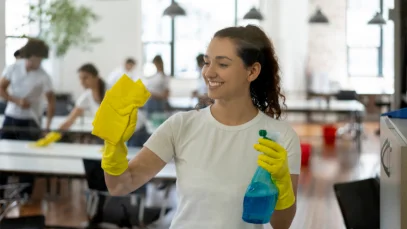

Cleaner Dress Code
Cleaners typically wear practical, comfortable clothing and protective gear such as gloves or masks. High-visibility vests and sturdy footwear are essential in industrial or commercial settings.

Cleaners typically wear practical, comfortable clothing and protective gear such as gloves or masks. High-visibility vests and sturdy footwear are essential in industrial or commercial settings.
Cleaners perform tasks including dusting, sanitising surfaces, emptying bins, and managing specialised cleaning needs, such as carpet maintenance or deep cleaning in high-traffic areas.
Staying organised and following a structured cleaning routine improves efficiency, while attention to detail is vital for maintaining hygiene standards, particularly in healthcare or food service environments. Adapting to client-specific requirements and being punctual helps to build trust and professionalism. Ergonomic techniques such as using long-handled tools and switching hands for different tasks help to reduce fatigue and ensure thorough cleaning.
Key qualities include attention to detail, time management, and familiarity with cleaning products and tools. These skills ensure effective cleaning while meeting safety standards.
Being meticulous ensures every surface is cleaned, even in hard-to-reach areas. This thoroughness is particularly important in environments such as hospitals, where hygiene is critical. Spotting dirt or damage that others might overlook reflects professionalism and ensures client satisfaction. Regular quality checks help maintain high cleaning standards.
Effective Cleaners work quickly without sacrificing quality. Scheduling tasks and prioritising high-traffic areas enable efficient use of time. Maintaining a consistent workflow ensures deadlines are met, especially in workplaces with strict schedules. Multitasking and flexibility allow Cleaners to adapt to unexpected changes or additional requests.
Understanding which cleaning agents are suitable for specific surfaces prevents damage and ensures effective results. For example, knowing which products kill bacteria versus those that simply remove dirt is crucial when deciding which is best to use. Familiarity with chemical safety guidelines and correct usage prevents accidents and ensures compliance with health and safety standards.
There are no set qualifications or education subjects needed for this type of work, and employers should provide all work-related training. However, that being said, a certificate in COSHH (Control of Substances Hazardous to Health) would be useful, as it highlights that you have knowledge of what’s in the products you use and how to therefore use them safely. Having a UK driving licence may also be beneficial if you need to travel to various locations as part of your duties.
Cleaners manage a variety of tasks, from maintaining cleanliness to adhering to hygiene standards. Their duties vary based on the environment and client needs.
General duties include dusting, vacuuming, mopping, and emptying waste bins. In specialised roles, tasks may involve carpet cleaning, window washing, or using industrial equipment for deep cleaning. Cleaners in healthcare facilities focus on sterilising surfaces to minimise infection risks. In office roles, attention may be given to communal areas such as kitchens or toilets. Outdoor Cleaners manage litter, sweeping, and maintaining public spaces. Each task requires efficiency and attention to detail to meet expected standards. Cleaners need to be able to adapt their approach to different environments, ensuring consistent quality across all areas of their responsibility.
Adhering to safety and hygiene regulations is critical. This includes using personal protective equipment (PPE), following chemical safety guidelines, and ensuring proper waste disposal. Regular cleaning and disinfection routines prevent the spread of germs, especially in high-risk areas. Maintaining hygiene extends to equipment care, such as sanitising mops and cloths after use. Compliance with safety standards protects both the Cleaner and those occupying the space.
Experienced Cleaners can move into specialised roles, such as industrial or biohazard cleaning, which offer higher pay. Supervisory roles, like managing cleaning teams, involve coordinating schedules, training staff, and ensuring quality standards. Some Cleaners transition into facilities management, overseeing broader maintenance responsibilities. Pursuing certifications or training in advanced cleaning techniques opens doors to these opportunities. Career growth in this sector depends on experience, reliability, and a commitment to excellence.
No formal experience is required, as on-the-job training is typically provided. However, previous cleaning roles or knowledge of safety practices can be advantageous.
Cleaning roles range from domestic to commercial, industrial, and healthcare settings. Specialised jobs include biohazard cleaning or deep cleaning in high-traffic environments.
Apply through agencies or directly to companies. Temporary roles offer an excellent entry point for those new to the field.
Highlight relevant skills, such as time management and attention to detail. Use this Cleaner CV template for guidance.
Cleaners in the UK typically earn £12.71 to £14 per hour, with higher rates for specialised roles or positions in urban areas.